
|
Menu |

|
NEED FOR THE DEVELOPMENT
|
The Lasdun Wall comprises 4 separate buildings, 3 of which were originally designed to accommodate scientific research and teaching. The science research laboratories and the world-class research they support within the Lasdun Wall are at greatest risk should a building failure occur. It is not possible to quickly or easily provide alternative specialised facilities should it become necessary.
CONDITION OF THE LASDUN WALL
Condition issues within the Lasdun Wall are mainly linked to the original design and construction of the building, with others associated with the age of the building which well exceeds its original design life of 50 years.
For this reason, the condition of the Lasdun Wall continues to deteriorate and consequently planning for significant failures of building services and structure should not be delayed.
48% of the Academic Estate at UEA is vulnerable because of the condition of the Lasdun Wall. This includes the four buildings of the Lasdun Wall complex, as well as several adjacent buildings which are linked to the Wall.
The building is currently safe to occupy and use, however, there is no alternative to the proposed refurbishment if the deterioration is to be stopped and addressed. Without refurbishment is it likely that the building will need to be closed in the near future.
REFURBISHMENT STRATEGY
A major refurbishment allows the application of modern building knowledge and technological developments in construction which have evolved substantially since the 1960s. It is neither feasible nor cost effective to address the condition issues and remove asbestos in a piecemeal manner – the only way to provide a future viable use of the Lasdun Wall is to carry out a full ‘strip back to frame’ refurbishment.
The proposed refurbishment will protect and conserve the original concrete frame construction and spandrel concrete cladding which is celebrated within the Grade II listing. The scheme will provide a means of continuing many of the founding principles Lasdun established in the original design, as well as resolving all existing condition issues and enabling future maintenance arrangements to be much more cost effective. It will be possible to modernise and maintain individual floors in future if asbestos is fully removed, providing much more scope to protect this significant building.
|
|
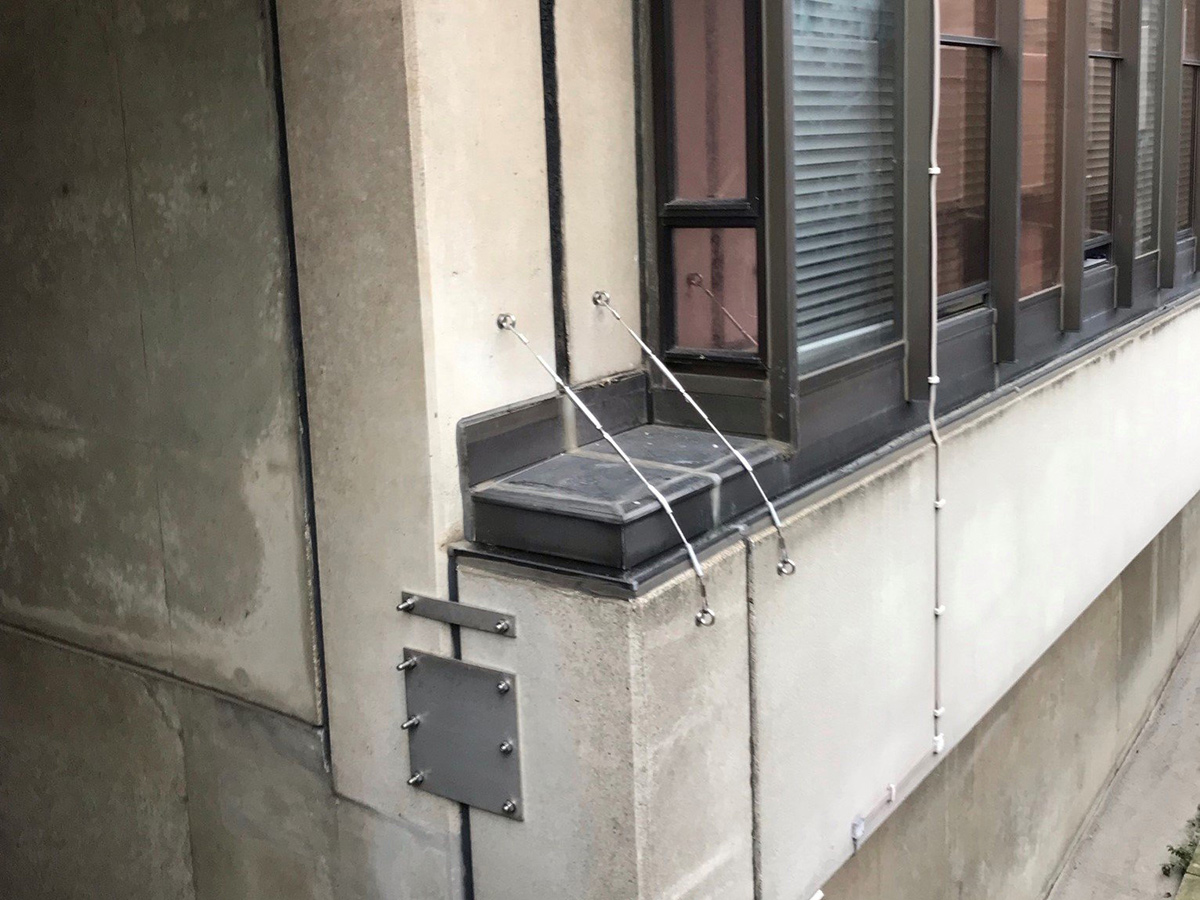
typical temporary reinforcement works required due to corroding cladding brackets |
An emergency temporary fixing solution was applied in 2020 to prevent corroded cladding brackets failing and leading to a catastrophic failure of the façade. The only option for removing the temporary brackets is replacement of the original brackets internally as part of the proposed refurbishment.
FUNDAMENTAL PILLARS OF THE PROPOSED REFURBISHMENT
There are five fundamental pillars to the refurbishment strategy.
- The refurbishment must meet the academic needs of the University
- All condition issues must be addressed to provide a future viable use of the building
- Asbestos must be fully removed from all internal areas
- The refurbishment must provide an essential contribution to achieving Net Zero Carbon
- The scheme must be affordable within the context of the condition of the wider University Estate
The photos below clearly illustrate design issues and the deteriorating condition of the Lasdun Wall which explains the need for a full refurbishment to enable the issues to be addressed in a way that provides a future viable use for the building.
|
|
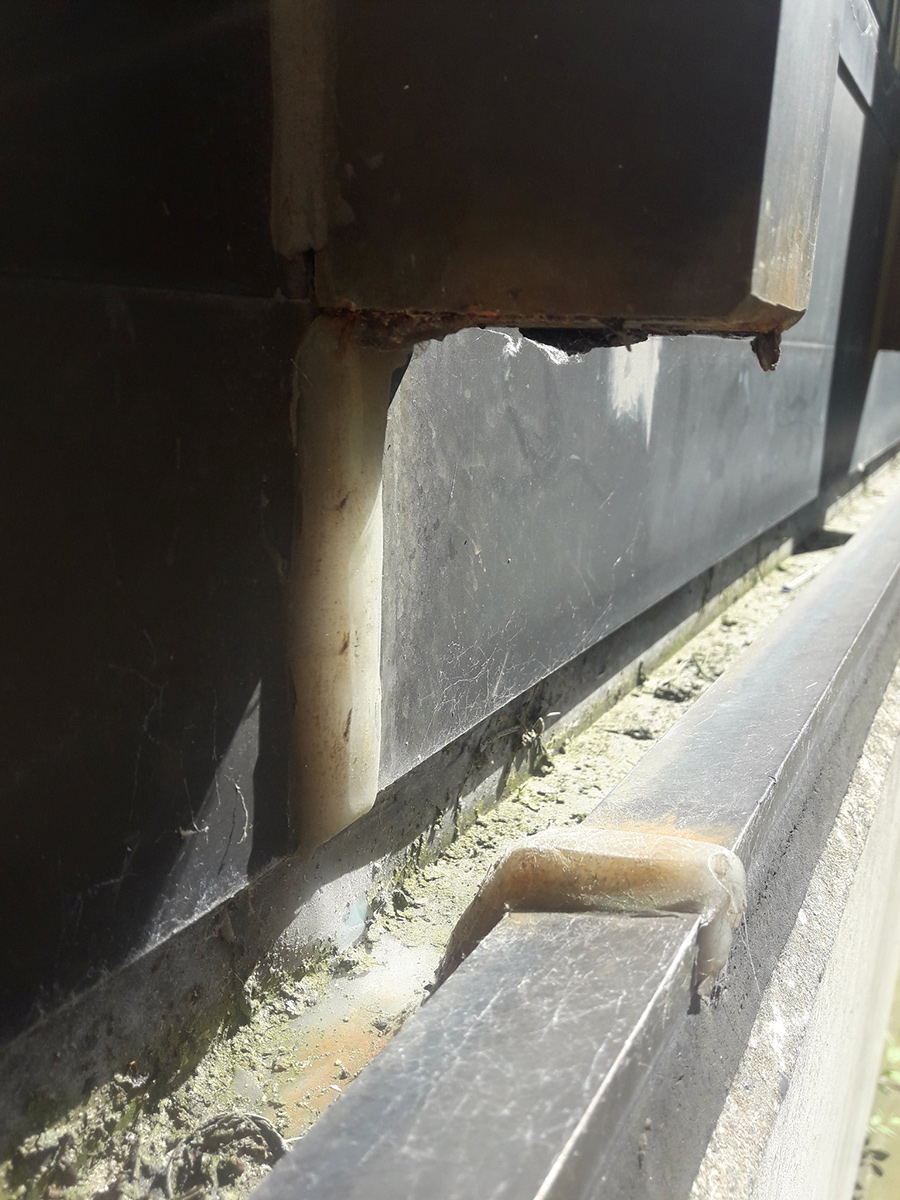
Window design water route |
Window Design
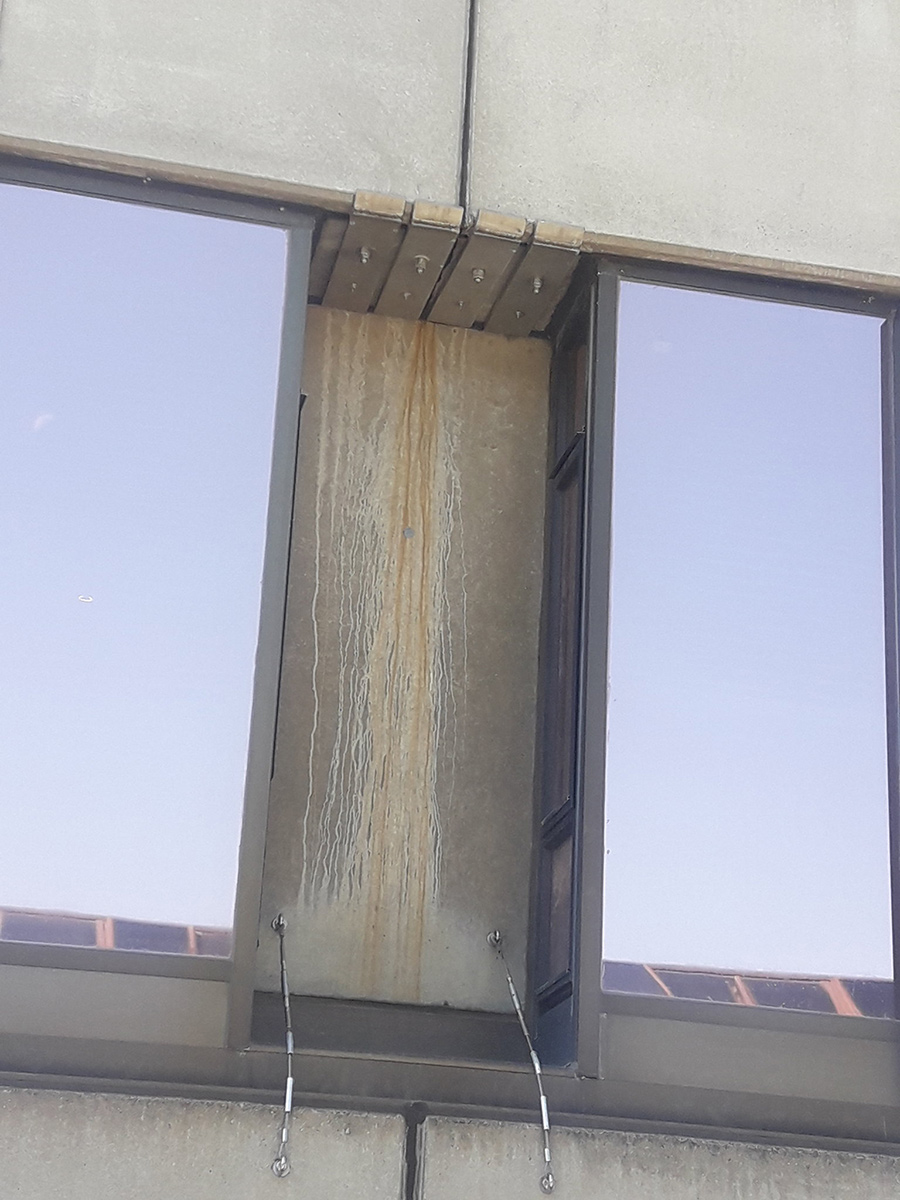
The window design is unique and routes water internally behind the concrete cladding. Outlets are small, block easily and internal pipes are corroded. The design of the window system has allowed water to enter into the building over a period of several decades. Many of the windows and drainage points have been sealed with mastic from 1980s onwards to temporarily “remedy” the failings, however the damage had already been done, and water ingress has caused corrosion of the brackets which support the concrete cladding.
|
Rust stains from water that has caused corrosion to the cladding brackets
|
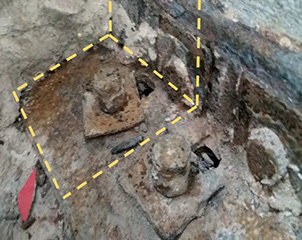
Corroded cladding brackets
Water Ingress
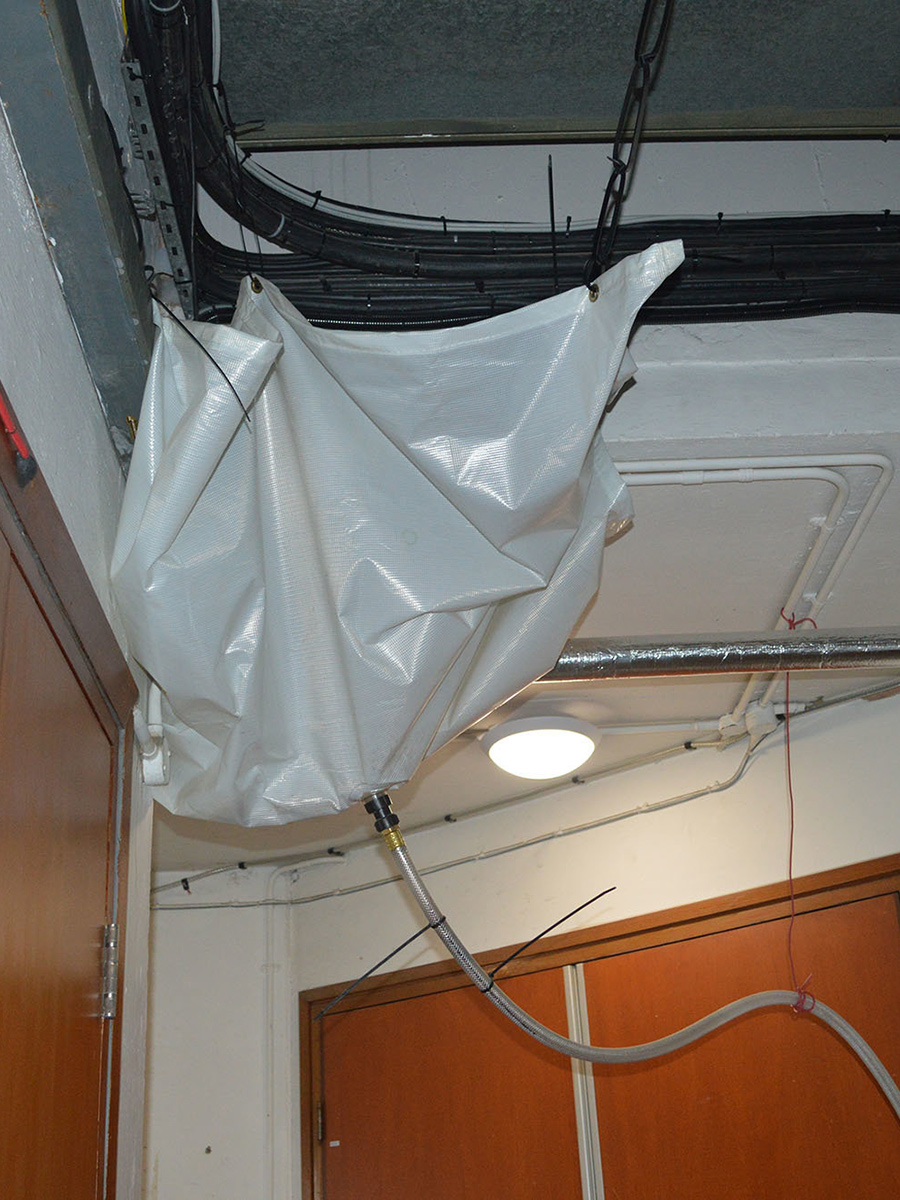
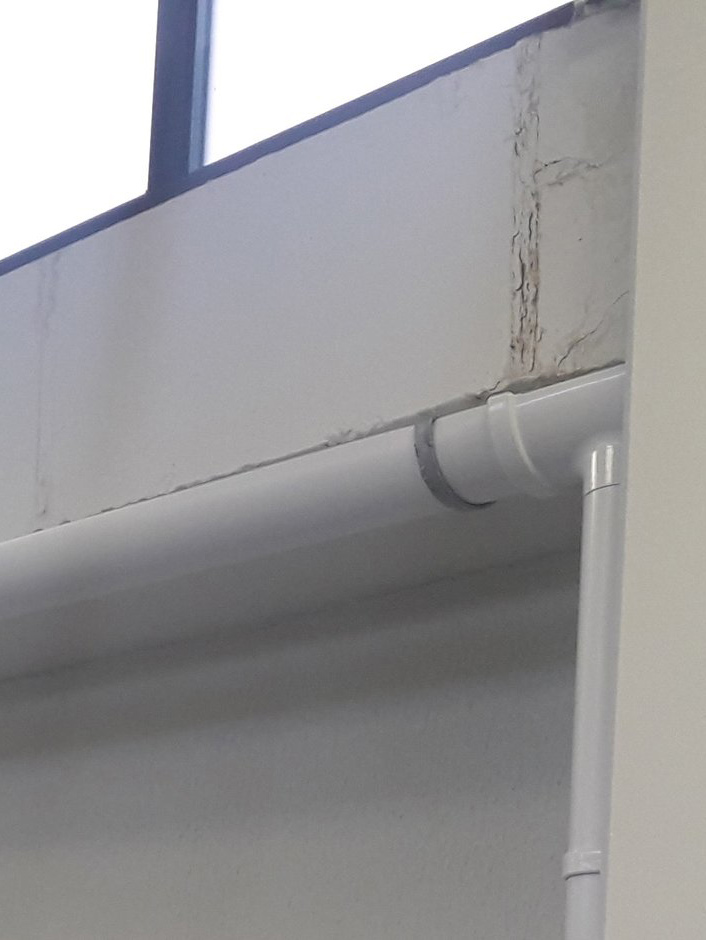
Failure of the building to prevent rainwater ingress has required temporary solutions to prevent water damage to internal space and equipment – the photos show internal guttering and rain collection devices that have become necessary in several areas but which are not effective long-term solutions and cannot prevent water damage continuing to be caused to the structure itself.
|
|
Internal rain capture bag |
Mechanical and Electrical Services
Lasdun Wall M&E services present a major risk to business continuity. All services significantly exceed their original design life, and major floods and loss of electrical power are common events. The current options to upgrade services are highly constrained by asbestos risks.
|
|
Internal gutter |
|
|
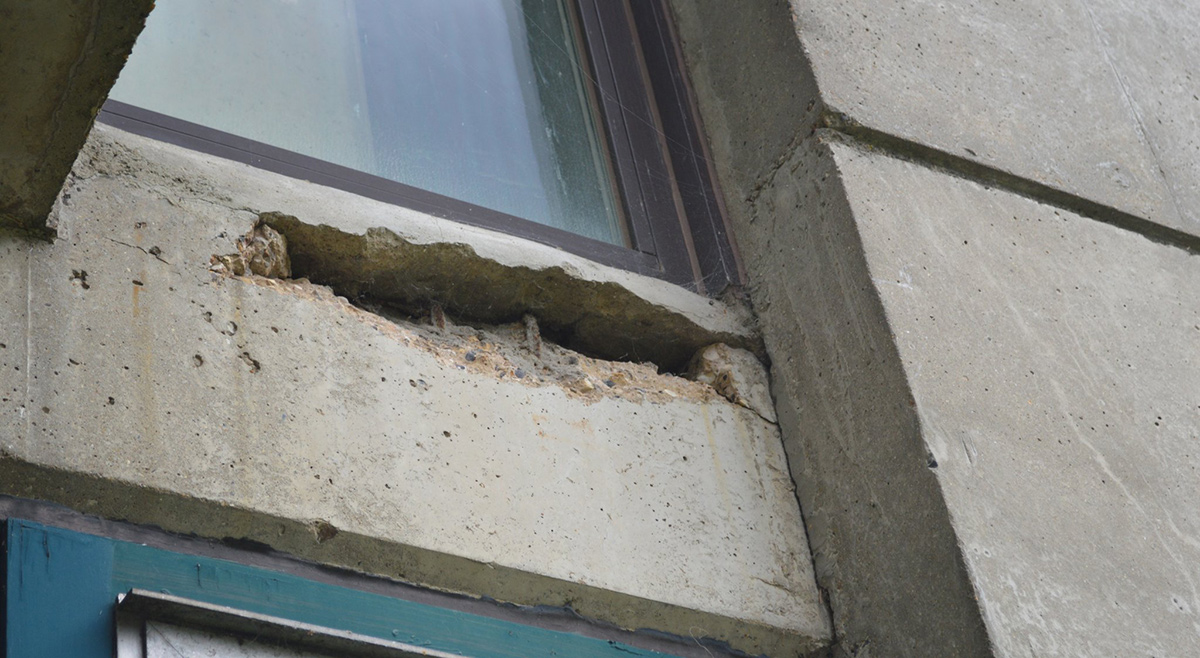
B3 Concrete damage |
Concrete condition
The original concrete frame and cladding is itself in good condition. However, spalling of concrete is a common issue in buildings of this age and there is a need to carry out concrete repairs and structural strengthening in order to enable the building to provide a further 50+ years of service.
The photo to the left shows concrete damage on Building 3 that is more than 7cm deep and has exposed the reinforcement bars. The example is typical of concrete condition issues on and around the Lasdun Wall.
Asbestos
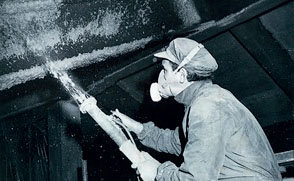
During the 1960s, building materials used in construction commonly contained asbestos. Spraying was a typical method of application, as shown in the photo opposite. This method of application was direct however, the method utilised high pressure application guns, and overspray and lack of control of wet material is a known issue. This method was used to apply asbestos to service risers within the Lasdun Wall. The asbestos material applied this way has been removed, however, the legacy is major on-going asbestos management regimes, monitoring and control measures in order to ensure the building is safe to occupy and this legacy will continue until all asbestos within the building can be safely removed.
|
|
Spraying Asbestos, Stock Image |