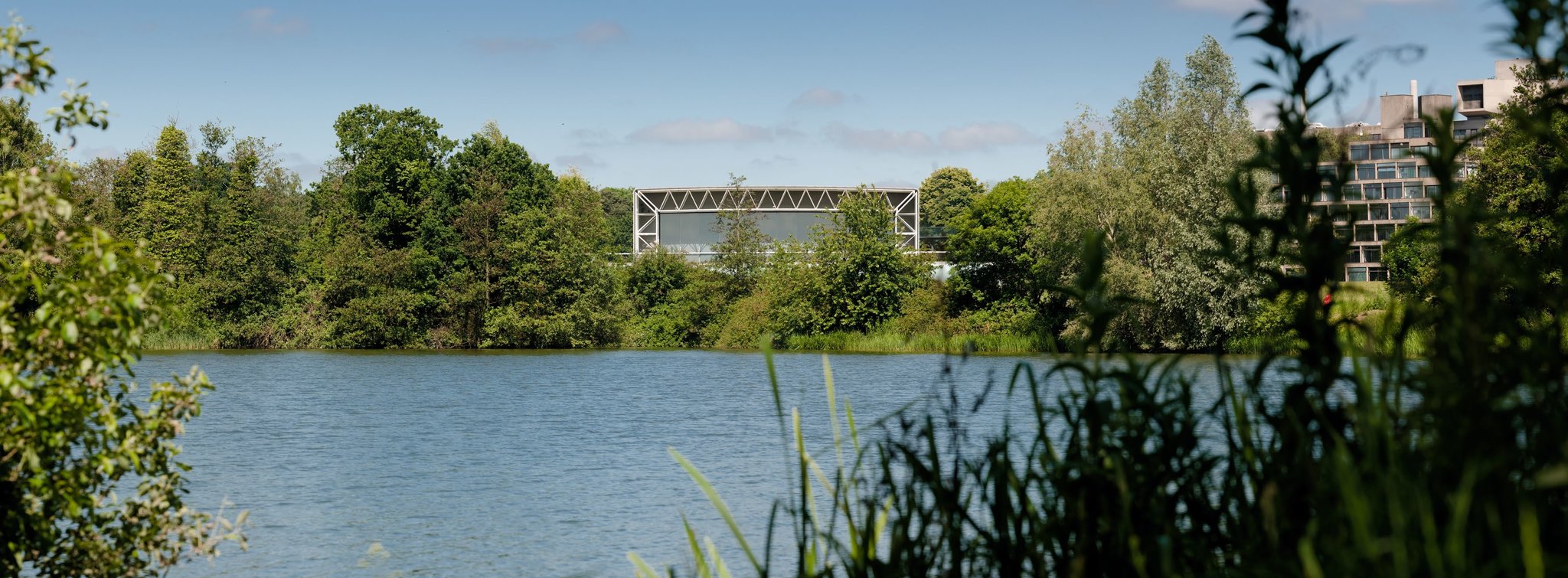
What will the building look like following refurbishment?
The refurbishment will carefully respect the Sainsbury Centre’s architecture, designed by Lord Norman Foster, returning the building closer to its original 1978 appearance. Its distinctive character will be retained, with the overall form and key architectural features preserved.
The original architect has guided the extension and past alterations to the building since its inception and is leading the project team in delivering this scheme.
Externally, the upgrade to the building envelope, alongside new glazing and enhanced entrance elements, will improve performance while closely reflecting the building’s original appearance. The end walls towards the east and west will now be double-glazed, preserving the admission of natural light and visual connectivity to the landscape. These enhancements will improve the building’s environmental performance without altering its overall character.
Internally, the programme introduces carefully considered upgrades to finishes, lighting and layouts, alongside enhanced visitor amenities such as a refurbished café and bar, improved bathrooms, and clearer wayfinding. These changes will improve accessibility and the overall visitor experience, while respecting the building’s original design intent.
Enhancements to the surrounding landscape, including improved planting, seating and an expanded south terrace, will strengthen the setting of the building while maintaining its architectural prominence.
Overall, the proposals will deliver a building that remains true to its original design, while significantly improving functionality, durability and thermal efficiency.
Are any parts of the Sainsbury Centre being demolished?
The proposals are focused on refurbishment rather than demolition. Any interventions will be designed to be sympathetic to the building, ensuring that its architectural significance and character are carefully preserved.
Will the refurbishment be sustainable?
Yes. Sustainability is a priority for the refurbishment and is essential to securing the long-term future of the Sainsbury Centre and supporting the University’s wider environmental objectives. The University has set clear targets to achieve an 80% reduction in campus carbon emissions by 2030 and 100% net zero carbon by 2045 or earlier, without relying on offsetting.
A key element of the works is the upgrade of the building envelope, which will significantly improve thermal performance and reduce heat loss. Alongside this, the introduction of high-performance double glazing will further reduce heat loss and improve energy efficiency, while solar PV panels installed flat on the roof will allow the production of energy on site. Rainwater harvesting will allow for grey water recycling. Materials being removed from site will be recycled where practicable.
The refurbishment will also include the upgrade and replacement of building systems, improving efficiency and enabling the use of more sustainable, low-energy solutions. These measures will contribute to a substantial reduction in carbon emissions over the building’s lifetime and prepare the building to become ‘net zero’ ready. Overall, the refurbishment proposals are expected to halve the amount of energy the building consumes today.