Sainsburys Centre Refurbishment

Menu

DESIGN PROPOSAL

GENERAL ARRANGEMENT

In summary, the proposal provides science research space, a teaching space and a new accessible entrance at ground floor level. The science research space is indicated in red and blue and the teaching space in green.


The teaching space is located on the ground and first floor level with a Social Learning Avenue (indicated in yellow) in between. This allows this more highly populated space to benefit from both the new entrance as well as the existing main entrances from the walkways. The narrower form at these levels allows the teaching spaces to benefit from more natural daylight as they are next to the external façade.


The new accessible entrance connects into the ‘Learning Avenue’ at Level 0 (indicated in yellow). This Avenue will be extended through later phases of the Lasdun Wall Refit and through Building 3 into Building 4 through the centre of the existing building.


The science research spaces are above the teaching spaces and have the deeper 28m planform. This deeper planform provides a covered entrance podium as part of the new accessible entrance in the left-handspur. In the right-hand spur it provides a new triple height space to allow for science activities that need a higher floor to ceiling height.


The Arts Spur is reconfigured internally to provide science research space throughout.


Axonometric Plans


PROPOSED EXTENSION DESIGN AND THE BUILDING SETTING

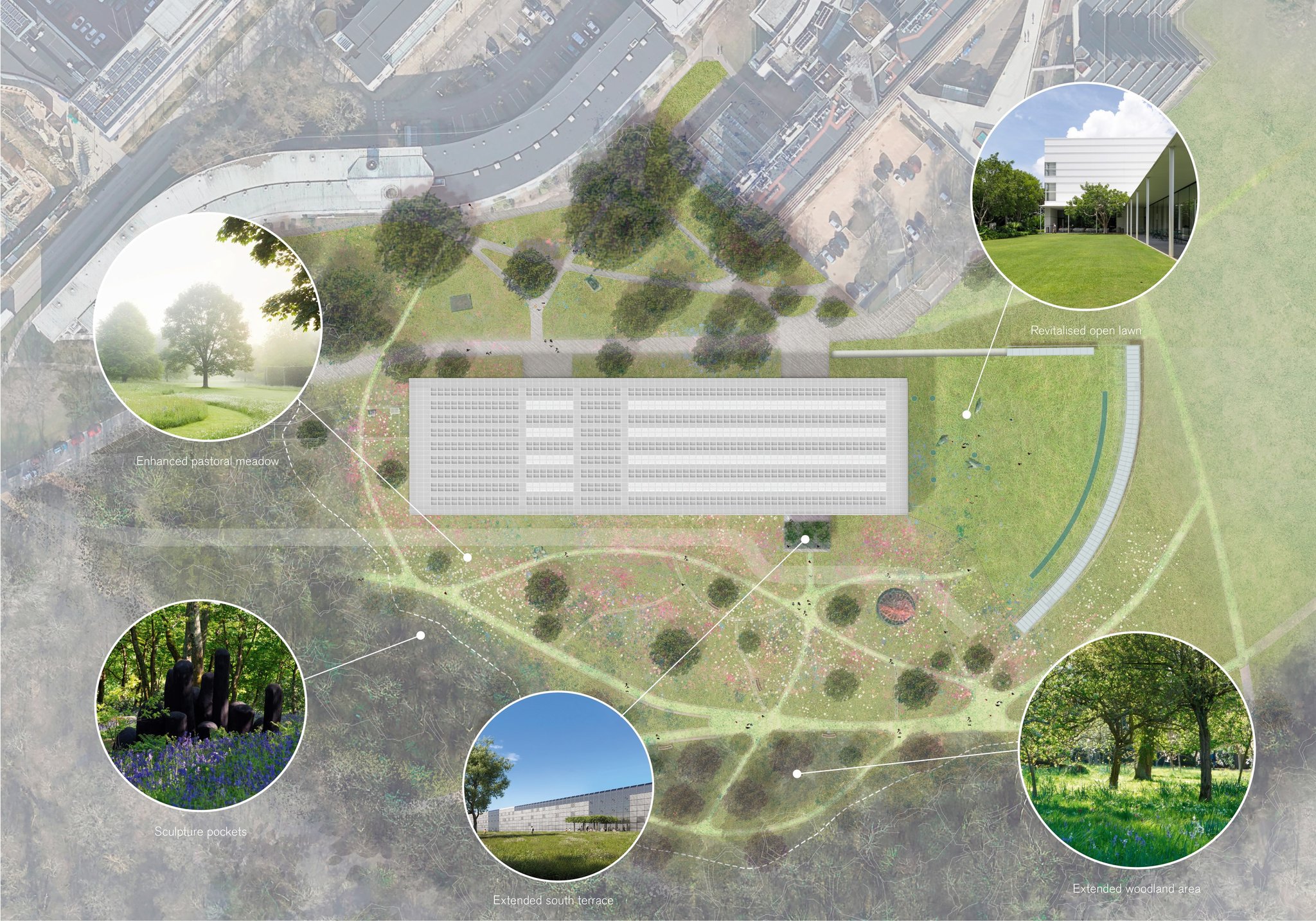
The proposal is designed to minimise the tree loss by keeping the new extension spurs close to the north façade, which maintains the trees in the copse adjacent to Chancellors Drive, this is illustrated by the image on the left. This image also shows the rooftop plant concentrated on the north of the proposal and at a lower level to preserve the key strategic views from the south and Broad.


Proposed scheme viewed from above with Founders Green to the left and the Arts Spur to the top right


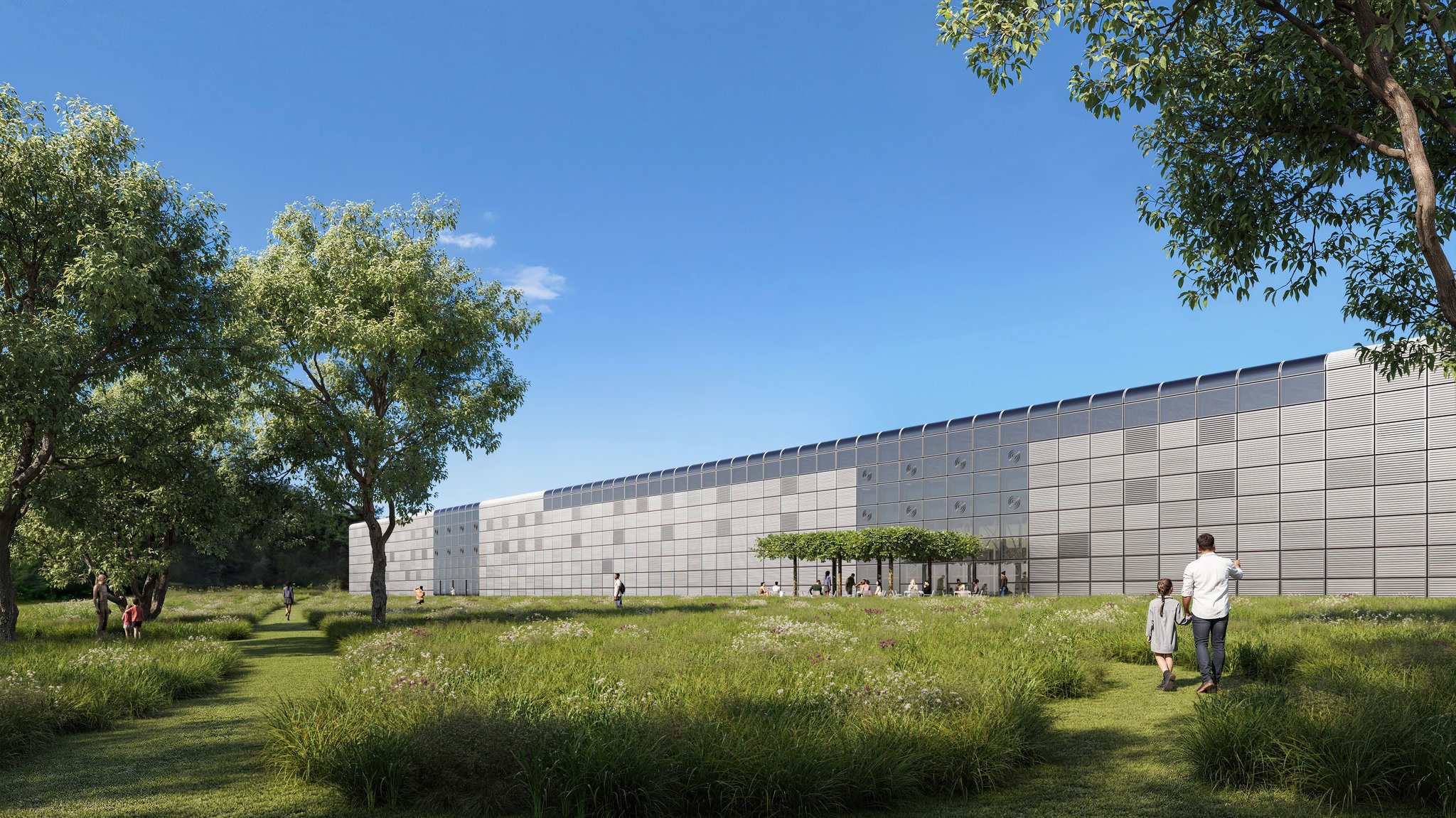
View from Founders Green approaching the proposal. The original building east end is in the foreground and the first new spur is to the right with new accessible entrance beneath


The image below on the left shows the first new spur which projects the upper levels, for science research, over the narrower teaching levels below, creating a new covered entrance podium with the new accessible entrance through the glass façade below. The image on the right shows the pedestrian route around the new north façade, the original building form is preserved with views of the existing central vertical core. The curved landscape form provides a sustainable drainage system and conceals external services and storage areas at the lower level.


Approaching the new entrance beneath the spur with accessible route to the right and graduated steps to the left


Walking around the north facades and connecting to the existing pedestrian route through the landscape

AXONOMETRIC 3Ds

The following axonometric views show the detailed general arrangement for each floor of the proposal.


Level 4 / General Arrangement (science research/plant)


Level 3 / General Arrangement (science research)


Level 2 / General Arrangement (science research)


Level 1 / General Arrangement (teaching level)


Level 0 / General Arrangement (teaching level)


Level 01 / General Arrangement (science research/engineering)


RESTORING THE EXISTING FACADE

The 3D images below show the existing façade on the left, and the proposal to restore and refurbish the façade on the right. The existing façade has no insulation and single glazed windows that are beyond their design life, leading to considerable heat loss in the winter and overheating in the summer. This creates an unsustainable demand on the heating and cooling of the building, which in turn generates significant amounts of carbon in a vain attempt to maintain the comfort levels. The new proposal addresses this by replacing the windows with new double glazed units, designed to match the original and providing a new modern insulation layer to the internal face of the concrete façade. The concrete panels are conserved and provided with new robust internal fixings during this process. This is a fundamental improvement to enable the historic fabric of the spandrel panels to be retained whilst also achieving 85% improvement in thermal performance.


Existing Facade


Refurbished Façade (upgraded thermal performance and conservation of the concrete panels)